They made a wish, and I didn’t push for requirements.
Aladdin’s first wish backfired. The genie granted it, to the letter. Without pausing to learn how to wield the genie’s magic, he spoke open-ended, unconstrained desires.
Early in my career, I learned that building what someone asks for and solving their problem are two different things.
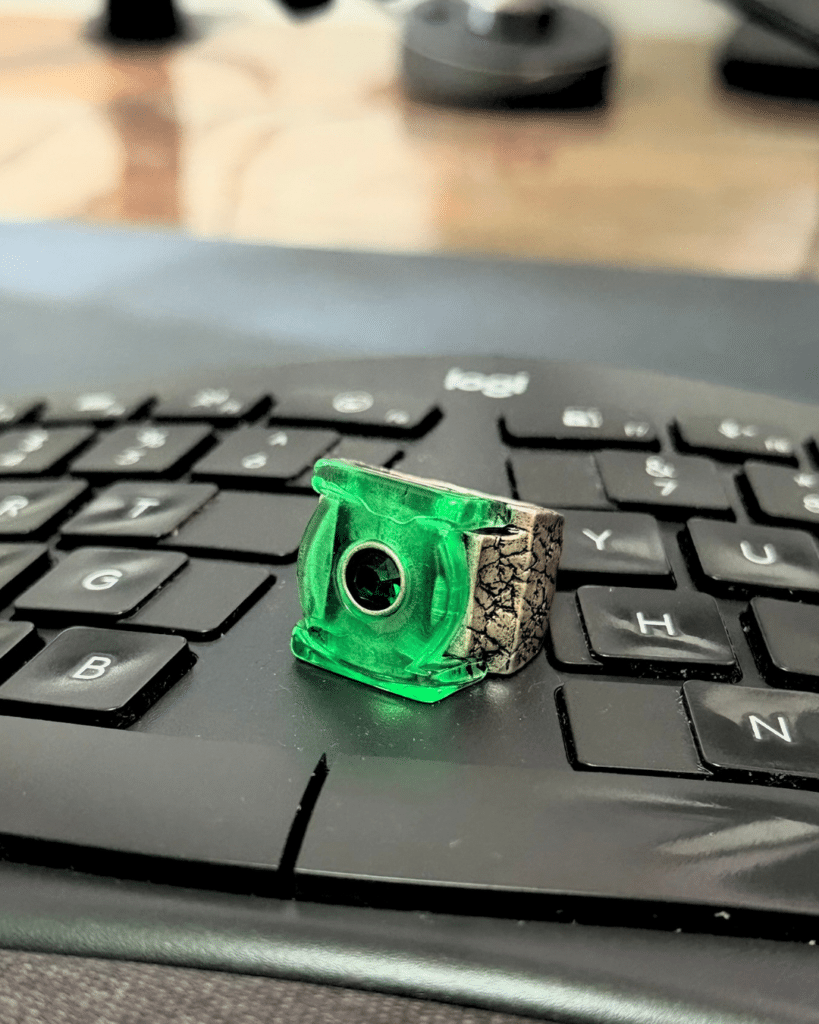
In 1940, Alan Scott debuted as DC’s Green Lantern, a railroad engineer who was saved from a train wreck by a mystical green flame. The magic, once wielded by a genie, now required human creativity. Scott forged a ring from part of the lantern to focus his will and 3D print his imagined constructs into reality.
By stopping to figure out what he wanted to build, he brought discipline to magic.
In 1959, cosmic exploration inspired DC to reimagine the Green Lantern as a space cop named Hal Jordan. The lantern was no longer magical. It was technology, engineered by alien immortals.
The ring now had an onboard AI. That’s pure science fiction.
The difference between a wish and a construct is precision. The ring needs clarity and structure from its user. That takes willpower.
When a client asked for help, my first thought was that this was a ten-person job. As my hands reached for the lamp to wish for an engineering team, I realized my brain was stuck in the past.
I reset, mapped the client’s goals to how their team actually worked, and described the solutions to close the gap. Will-powered imagination forged AI agents. Science fiction became science fact.
“Any sufficiently advanced technology is indistinguishable from magic.” – Clarke’s Third Law.
Are you making wishes, or are you building constructs?
Originally published on LinkedIn